
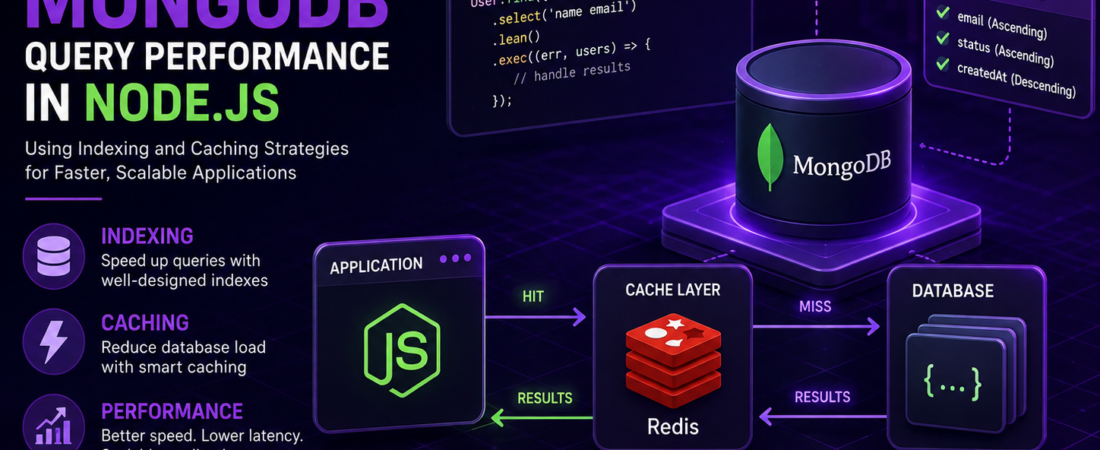
Improve MongoDB query speed in Node.js applications using indexing and caching strategies for better performance
# Optimizing MongoDB Query Performance in Node.js 14 using Indexing and Caching
I’ve recently worked on a Node.js project that relied heavily on MongoDB for data storage. As the dataset grew, we started noticing significant slowdowns in query performance. After digging into the issue, I realized that optimizing MongoDB query performance in Node.js 14 using indexing and caching could make a huge difference. In this article, I’ll share my experience and the strategies we used to improve query speed.
## What is the Best Way to Index MongoDB Collections for Faster Queries?
To improve query performance, it’s essential to understand how indexing works in MongoDB. Indexing allows MongoDB to quickly locate and retrieve specific data, reducing the time it takes to execute a query. In Node.js, you can create an index on a MongoDB collection using the `createIndex` method. Here’s an example:
“`javascript
const mongoose = require(‘mongoose’);
const userSchema = new mongoose.Schema({
name: String,
email: String
});
userSchema.index({ email: 1 });
const User = mongoose.model(‘User’, userSchema);
“`
> **Pro Tip:** Use the `explain` method to analyze the query plan and identify potential bottlenecks in your MongoDB queries.
## How to Implement Caching to Reduce MongoDB Query Load?
Caching is another effective way to improve query performance by reducing the number of requests made to the database. In Node.js, you can use a caching library like Redis or Memcached to store frequently accessed data. Here’s an example using Redis:
“`javascript
const redis = require(‘redis’);
const client = redis.createClient();
const cacheKey = ‘users’;
client.get(cacheKey, (err, data) => {
if (err) {
// handle error
} else if (data) {
// return cached data
} else {
// fetch data from MongoDB and cache it
User.find().then(users => {
client.set(cacheKey, JSON.stringify(users));
// return data
});
}
});
“`
> **Pro Tip:** Use a caching strategy like TTL (time to live) to ensure that cached data is updated periodically.
## Can I Use Both Indexing and Caching to Optimize MongoDB Query Performance?
Yes, you can use both indexing and caching to optimize MongoDB query performance. In fact, combining these two strategies can lead to significant performance improvements. By indexing your MongoDB collections and caching frequently accessed data, you can reduce the load on your database and improve query speed.
## FAQ
### What is the difference between indexing and caching in MongoDB?
Indexing and caching are two different strategies used to improve query performance in MongoDB. Indexing allows MongoDB to quickly locate and retrieve specific data, while caching stores frequently accessed data in memory to reduce the number of requests made to the database.
### How do I choose the right indexing strategy for my MongoDB collection?
Choosing the right indexing strategy depends on the specific use case and query patterns. You can use the `explain` method to analyze the query plan and identify potential bottlenecks.
### Can I use caching with other MongoDB optimization techniques?
Yes, caching can be used with other MongoDB optimization techniques like indexing, replication, and sharding.
### How often should I update my cached data?
The frequency of updating cached data depends on the specific use case and data freshness requirements. You can use a caching strategy like TTL to ensure that cached data is updated periodically.
### What are some common pitfalls to avoid when implementing caching in Node.js?
Common pitfalls to avoid when implementing caching in Node.js include caching sensitive data, not implementing a caching strategy, and not monitoring cache performance.
In conclusion, optimizing MongoDB query performance in Node.js 14 using indexing and caching is crucial for improving application performance. By understanding how indexing and caching work, and implementing these strategies effectively, you can significantly improve query speed and reduce the load on your database. Optimizing MongoDB query performance is an essential step in ensuring the scalability and reliability of your Node.js application. Keep following SpiritCode for more posts on optimizing database performance and other software development topics.